
Biological Clocks: What They Measure, What They Mean, and Where They Actually Belong in Modern Care
Why Biological Clocks Matter Now
For years, aging was something clinicians acknowledged but couldn’t meaningfully measure. Chronological age was a blunt proxy. Functional decline was recognized only after it showed up clinically.
That’s changing.
Biological clock and pace of aging testing — particularly epigenetic aging clocks — are moving from research into real-world clinical conversations. Patients are asking about it. Longevity practices are experimenting with it. Researchers are refining it. And lab infrastructure is finally catching up to clinical curiosity.
What’s new isn’t the idea that people age at different rates. What’s new is the ability to quantify that difference, track it over time, and potentially intervene earlier — before disease, disability, or irreversible decline sets in.
The question for modern clinicians isn’t whether biological clocks are interesting.
It’s where they add signal, where they don’t, and how to use them responsibly.
What Are Biological Clocks — Really?
At their core, biological clocks attempt to answer a deceptively simple question:
How old is this body behaving —biologically — compared to how many years it’s been alive?
Most modern biological clocks are based on epigenetic markers, specifically DNA methylation patterns. These chemical tags sit on DNA and influence gene expression without changing the underlying genetic code.
Certain methylation patterns change predictably with age. Others shift in response to:
Inflammation
Metabolic dysfunction
Environmental exposures
Lifestyle factors (sleep, nutrition, exercise, stress)
Circadian rhythms
By analyzing thousands of methylation sites, epigenetic clocks estimate biological age, pace of aging, or risk trajectories for morbidity and mortality — depending on the model.
How This Differs from Chronological Age
Chronological age tells you how long someone has been alive.
Biological age attempts to describe how much physiological wear and tear has accumulated.
Two 50-year-olds can have meaningfully different biological ages — and very different risk profiles — even if standard labs look “normal.”
That’s the promise.
The limitation is that biological age is a model, not a diagnosis. It’s an aggregate signal, not a disease-specific marker.
Who’s Building the Infrastructure?
Among laboratories advancing biological clock testing into clinical workflows, TruDiagnostic has become one of the most visible and widely used players.
Their platform offers multiple epigenetic clock models derived from peer-reviewed research, including clocks designed to assess:
Biological age
Pace of aging
Mortality and healthspan risk
Immune aging and inflammation-related signatures
From a clinician perspective, what’s notable isn’t just the science — it’s the translation layer. TruDiagnostic packages complex epigenetic data into interpretable reports that can be tracked longitudinally, making them usable for monitoring interventions rather than one-off curiosity testing.
This has positioned TruDiagnostic less as a “longevity gadget” and more as infrastructure for longitudinal aging assessment, particularly in functional, integrative, and longevity-focused practices.
How the Category Is Taking Shape
Biological age and epigenetic testing is not a single, unified product category. Multiple laboratories — including Generation Lab — are developing biological clock offerings with different design goals, validation strategies, and intended use cases, ranging from consumer-facing reports to research- and clinic-oriented models.
For clinicians and healthcare leaders, the question is not which company to choose, but how to evaluate what a given biological clock is designed to measure — and what it is not.
Key considerations include:
Which epigenetic models are validated for specific outcomes (e.g., aging pace, morbidity risk, mortality associations)
How methylation data are processed, updated, and contextualized
Whether the platform supports longitudinal tracking and integration into clinical workflows
As this category matures, variation in validation depth, reporting rigor, and infrastructure readiness remains significant — making discernment more important than brand recognition.What Does This Mean for Clinical Practice?
Biological clocks are not diagnostic tests. They don’t tell you what disease someone has.
Their value lies elsewhere.
Where Evidence Is Strongest
Current evidence supports biological clocks most convincingly for:
Risk stratification: Identifying individuals aging faster than expected
Longitudinal monitoring: Tracking response to lifestyle, metabolic, or inflammatory interventions
Research-informed prevention: Providing an integrated signal of cumulative physiological stress
They are particularly useful in patients who:
Appear “normal” on standard labs but feel unwell
Have strong family histories without overt disease
Are engaged in prevention and behavior change
Are undergoing longevity or metabolic optimization programs
Where Caution Is Required
Biological clocks are not yet validated to:
Diagnose specific diseases
Predict exact timelines for morbidity
Replace established clinical markers
Justify aggressive interventions in isolation
Over-interpretation is the biggest risk — especially when clocks are treated as verdicts rather than directional signals.
A Practical Framework: When (and How) to Use Biological Clocks
Before ordering a biological clock test, run it through these filters:
1. What question is this answering?
Good uses:
“Is this patient aging faster than expected?”
“Is our intervention changing the trajectory over time?”
Poor uses:
“What supplement should I prescribe based on this number?”
2. Will you repeat it?
Biological clocks are far more meaningful longitudinally. A single data point can create anxiety without insight.
If there’s no plan to retest, reconsider ordering.
3. Can you contextualize it?
Clock data should sit alongside:
Clinical history
Metabolic markers
Inflammatory markers
Lifestyle context
Never interpret in isolation.
4. How will you explain uncertainty?
Patients need to understand:
This is probabilistic, not deterministic
Improvement doesn’t guarantee protection
Worsening doesn’t mean failure
The clinician’s role is translation, not amplification.
The Bigger Picture: Why Biological Clocks Fit the Modern Diagnostic Shift
Biological clocks sit at the intersection of several major shifts in care:
From episodic to longitudinal
From disease treatment to trajectory management
From single biomarkers to integrated signals
From clinician memory to data-assisted reasoning
They align naturally with AI-enabled care models, where pattern recognition and trend analysis matter more than static snapshots.
But they also expose a truth modern clinicians must grapple with:
Better measurement without better interpretation increases risk — not clarity.
The future of biological clocks depends less on the math and more on how responsibly they’re integrated into clinical reasoning.
The Takeaway
Biological clocks are not magic. They are not diagnoses. They are not crystal balls.
They are a meaningful new class of tools that help quantify aging as a dynamic, modifiable process — when used with restraint, context, and longitudinal thinking.
Labs like TruDiagnostic are building the infrastructure to make this data usable in real-world practice, while companies like Generation Lab reflect a growing and competitive ecosystem.
For clinicians, researchers, and healthcare leaders, the question isn’t whether biological clocks belong in the modern diagnostic toolkit.
It’s how to use them in a way that adds insight without creating noise — and how to integrate them into care models that value prevention, personalization, and longitudinal intelligence over hype.
That’s where biological clocks are headed.
And that’s where modern clinicians need to stay thoughtful, not reactive.
How I AI: longevitydocs AI Mastermind on Jan 31
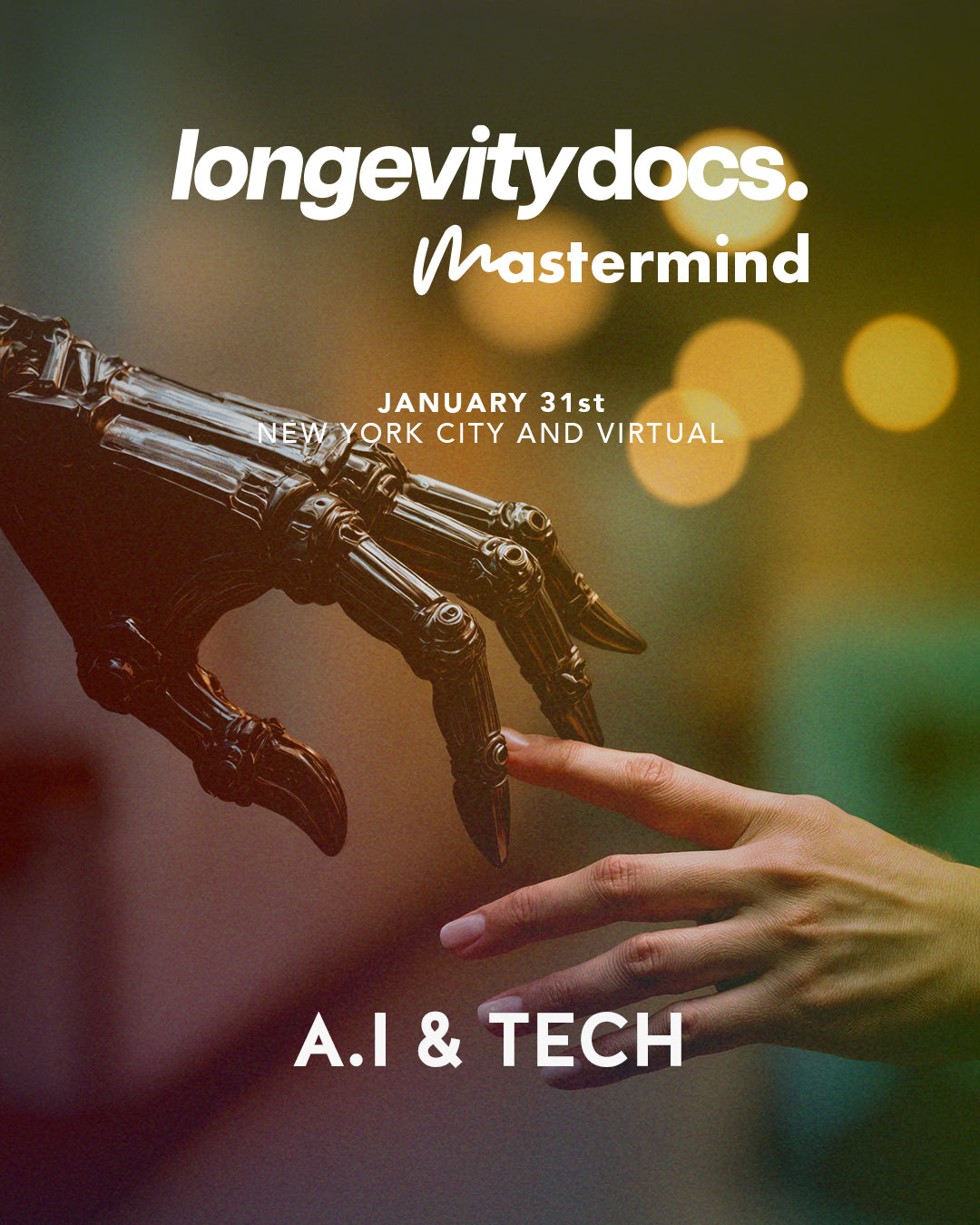
We’re fans of Dr. David Luu and longevitydocs, and thrilled to be joining for the upcoming AI Mastermind in NYC on Jan 31. It’s a full-day, closed-door experience with the physicians and scientists who are actively shaping AI in clinical longevity care.

If you’re building a longevity practice in 2026, this is where you’ll learn from the people who’ve done it, hosted by Zahi Fayad from Icahn School of Medicine at Mount Sinai
You will learn about (from the people actually doing the work):
1. The AI Grand Replacement - Yin Aphinyanaphongs from NYU Langone Health
2. The Aging Clocks Menu - David Furman from Buck Institute for Research on Aging
3. The Multi-Omics Protocol - Steven AR Murphy MD
4. Zoom on Cardio Longevity - Giovanni Campanile
5. Case Study: The AI-Enhanced Longevity Doctor - Sunjya Schweig, MD
6. Scaling Longevity Clinics with AI - John Haughton MD, MS
7. How to build an AI-assisted Practice - Dave Korsunsky
8. The AI-Native EHR for Longevity Medicine - Sunita Mohanty
9. From Data to Clinical Decisions - Neil Panchal, DO
10. The Skinspan Stack - Saranya Wyles, M.D., Ph.D. from Mayo Clinic
11. Neuro Tech Game - Christin Glorioso, MD PHD
12. Connected Longevity - Dr David Lipman
13. The truth about at home testing - Marina Pavlovic Rivas
The last in-person tickets are available here while online access is also still available - and we’ll be there live!
Get ahead in 2026 with Vibrant, the AI-powered, all-in-one EHR built specifically for personalized medicine. Schedule a demo with our team to learn more about how we can help you extend your clinical brain and deliver great personalized care.
This Week in Clinical AI
Fullscript–Oura integration turns wearable data into a clinical signal, not just a wellness metric. Fullscript and Oura have announced a strategic partnership that integrates Oura Ring sleep, readiness, and activity trends directly into Fullscript’s clinician dashboard, alongside labs, treatment history, and supplement protocols for more than 125,000 providers. Beginning in early 2026, clinicians will also be able to prescribe and fulfill Oura Rings through the Fullscript catalog, effectively closing the loop between biometrics, clinical decision-making, and protocol adjustments. As wearables become native to prescribing platforms, longitudinal recovery and sleep data can start functioning as routine clinical inputs — tightening the feedback loop between lifestyle, nutraceuticals, and objective changes in patients’ physiology.
Amazon’s Health AI joins a wave of “agentic” primary care assistants. Following launches from OpenAI and Anthropic, Amazon One Medical has released Health AI, an agentic assistant embedded in the One Medical app that uses members’ medical records and pharmacy data to answer questions, manage medications, and book appointments. The tool is HIPAA‑compliant and wired with escalation protocols that hand off to clinicians when symptoms or risk flags cross pre‑defined thresholds. Primary care is quietly becoming the testbed for consumer‑grade, record‑aware AI copilots — forcing clinicians and health systems to decide how these assistants fit into continuity, liability, and team‑based care models.
NPR spotlights AI triage agents as a front door for primary care. A recent NPR feature follows patients using Mass General Brigham’s AI-driven intake tool, which collects symptom histories, proposes a provisional diagnosis and treatment plan, and then routes the case to a physician for review and telehealth follow‑up. Patients report dramatically shorter waits versus traditional scheduling, while clinicians receive structured summaries instead of starting from a blank screen. AI agents are beginning to absorb the “front‑end” cognitive load of primary care access — triage, documentation, and routing — while keeping clinicians in the loop as final decision‑makers.
👋 Welcome New Readers
The Modern Clinician is written for functional, integrative, and longevity-focused physicians who want to scale their impact and deliver cutting-edge care.
If you liked this one, share it with a colleague! We appreciate you spreading the word.
To learn more about the why behind this newsletter, start with our first post introducing The Modern Clinician.